
Anant Jeet Naruka shoots gold; Saurabh-Suruchi pair wins 10m air pistol mixed team bronze

'The US slump could hit our hosiery market hard since 40 per cent of our exports go there.' 'Job losses could be severe if the government doesn't step in fast.'

Tanvi Sharma, Vennala Kalagotla, Tanvi Reddy advance at Asia Junior Badminton Championships.

World champion D Gukesh overcame a loss against Leinier Dominguez Perez to beat the American duo of Wesley So and Fabiano Caruana to stand at fourth spot.

The memorandum of understanding on mutual logistics support is the first such major agreement that Vietnam has signed with any country.

It has charted an ambitious target. Japanese premium sports goods giant Asics - which sells 75 per cent of its shoes in the country at over ~12,000 a pair - wants to be the No. 1 running shoe player in the $90-a-pair organised market in India, currently dominated by Nike, Adidas and Puma. To do so, it is making an aggressive push into Tier-II and Tier-III cities, where customers are ready to lap them up - as well as setting up company-owned stores in four to five locations across key metros.

Like Gukesh, Aronian was just able to draw two games and lost one.

World champion Dommaraju Gukesh scored one win and four draws on the opening day to slip to joint-sixth in the St. Louis Rapid and Blitz chess tournament, a part of the Grand chess tour, in St. Louis (USA), on Friday.

Businesses are testing new markets, tapping into domestic demand, and pushing the government for relief.

According to an industry expert, companies such as Trident, Welspun India, Arvind, KPR Mill, Vardhman Textiles, Page Industries, Raymond, and Alok Industries stand to gain, as revenue from the US market accounts for 20-60 per cent of their earnings.
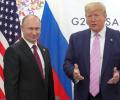
'The President's expectations shifted. The goal post moved and India didn't realize that the goal post had moved.'

'America's withdrawal from Vietnam was an inspiring moment for all of us. We believed that it was a glorious victory of ideology and spirit and as historic as the defeat of the Nazis exactly 30 years ago,' remembers Kumar Ketkar 40 years after the end of the Vietnam War.

Rajkanwar Sandhu takes centre fire pistol gold, Ankur Mittal excels in double trap
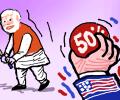
'Things may get much worse before they get better,' predicts Ajay Chhibber.

For kids in the United States, the tariff imposed by the Donald Trump administration on countries like China may no longer be a child's play, as toy prices are predicted to touch record highs this Christmas season. However, for India's toy export industry, which was ready to take giant strides in the sector by bagging heavy orders from the US retail giants like Walmart, Amazon, and Target Corporation, gaining from the China-Plus-One policy, the US tariffs came as a heavy jolt.
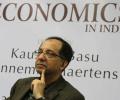
Former World Bank Chief Economist Kaushik Basu on Thursday said the US economic policy towards India has taken an unfortunate turn, noting that President Donald Trump's harsh stance against New Delhi appears baffling. US President Donald Trump on Wednesday announced a 25 per cent tariff on Indian goods from August 1, amid signs of a stalemate in the ongoing bilateral trade negotiations between the two countries.
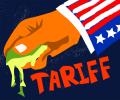
US President Donald Trump on Wednesday slapped an additional 25 per cent tariff on goods coming from India as penalty for New Delhi's continued buying of Russian oil.

Communication channels between India and the US are open to resolve the ongoing tariff issues, and the glitch in trade ties is only temporary, given the long-term relationship between the two nations, government sources said on Wednesday. The US' 50 per cent tariffs on Indian exports to America came into effect from August 27, barring a few sectors.

GST 2.0 may cushion consumers against US tariffs, but like the 2019 corporate tax cut, it risks being another tactical fix rather than a structural growth strategy, expects Debashis Basu.

'Financially we are sound and we have always broken even. 'It is just we don't have the personnel and that is why we have to close down.'
'We are a responsible nation, and would prefer to deal with sensitive issues with the maturity they deserve rather than take to social media.'

State governments have requested the Centre for export incentives, lifting of import duty in the case of cotton for the textile sector and GST exemptions.

Iraq twice hit back to beat Vietnam 3-2 in the Asian Cup on Tuesday.
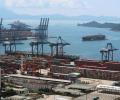
The government has set up an inter-ministerial group to monitor a possible surge in imports from countries like China, Vietnam and Thailand, fearing a surge in inbound shipments following the imposition of high reciprocal tariffs by the US on these countries, sources said. The product categories that may see an upsurge in diversion of imports from the US to India include consumer goods, electronics, chemicals and steel.

The festival's People's Choice Award, voted by the audience, is a strong indication of films that can eventually be nominated and even win Oscars. Twelve of the last 15 People's Choice winners have received Best Picture Oscar nominations.
Essential and strategic items such as pharmaceuticals, semiconductors, copper, and energy products like oil, gas, coal and LNG are exempted from the 27 per cent import duty announced by the US on Wednesday, according to think tank GTRI.
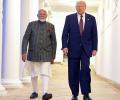
US President Donald Trump expresses frustration with the lack of progress in trade talks with India, imposing a 25% tariff. The move comes amid concerns over trade deficits and India's reliance on Russian military equipment and energy.

Herman Jansen continues to see India as a strategically-important emerging market despite selling the global rights for Maison House and Savoy Club brands from UTO Asia to Allied Blenders and Distillers (ABD). Herman will focus on growing its European and South East Asian market, Diederik Jansen, chief executive officer and seventh-generation owner of Herman Jansen, which has been producing spirits since 1777, told Business Standard.
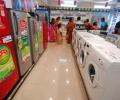
Consumer durable companies in India have begun early-stage talks with US importers at a time when the tariffs levied on Indian products are lower than those on competitors such as China. While the discussions started some time ago, many believe that the Donald Trump administration's tariff measures will help Indian companies expand their presence in the US market.
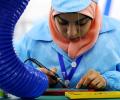
In 2023, the share of US electronics imports from India was a mere 1.9 per cent of the $520 billion they imported, while the total Indian electronics exports to the US was pegged at only $10 billion.

From labelling India the 'Tariff King' to slapping sweeping import duties, US President Donald Trump has steadily hardened his trade stance on India. These announcements are being seen as a pressure tactic to get New Delhi to agree to demands made by the US in the proposed Bilateral Trade Agreement (BTA).

'What India has done will surely embolden more countries to stand up to Trump.'

Former World No. 1 India's Kidambi Srikanth bows out of US Open badminton tournament
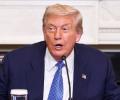
Donald Trump's tariffs, meant as political punishment, have avoided the predicted chaos, lifting US growth, weakening rivals, and letting him claim victory in a resilient global economy, observes T T Ram Mohan.
In trade negotiations, as in chess, sometimes you need to accept a temporary disadvantage to secure a better long-term position, points out Sonal Varma, chief economist (India and Asia ex-Japan) at Nomura.

India's pharmaceuticals and medical devices industries are still hopeful that trade negotiations with the US could cut a fairer deal for both sides, after President Donald Trump announced a 25 per cent tariff rate on India on a social networking platform without divulging the finer details.
United States President Donald Trump has said India is 'very close' to China in terms of its purchases of Russian oil and will pay tariffs of 50 per cent as he indicated that 'you are going to see so much secondary sanctions'.
To those who ask, "Is all this really worth it? Why can't domestic demand fill the gap?", it is important to remind them that only 13 economies since the Second World War have grown at 7 per cent or more for 25 years -- like India needs to. They all had one thing in common: Strong export growth underpinned by strong global engagement, explains Sajjid Z Chinoy.

'The success of the country's economic policies is affirmed by receipt of FDI of $15 billion last year, the highest in the Asia-Pacific after China and India, and well ahead of Indonesia, Australia, Singapore, Malaysia and Thailand,' notes Ambassador Talmiz Ahmad.
